

DIY Attic Assessment: How To Check Your Home's Insulation
Dec 04, 2025
Before scheduling a professional assessment, you can get a better understanding of your attic's insulation needs - and more accurate quotes - by doing a basic inspection yourself. You don't need to fully enter your attic; just being able to access the area immediately surrounding the hatch with a ruler or measuring tape will do.
Identifying Your Existing Insulation Type
One of the questions most insulation companies will ask is what type of insulation currently exists in your attic. This helps determine whether a top-up is possible, whether full replacement would be more effective, or whether professional removal is necessary due to hazardous materials, such as asbestos.
Great Northern Insulation has encountered everything from modern spray foam to decades-old straw and sawdust used as insulation in Ontario attic. Knowing what you’re working with is the first step toward improvement.
Here’s a quick guide to some of the most common insulation types and how to recognize them visually:
- Fiberglass Batts: Pink, yellow, or white fluffy material in rectangular sections
- Blown-in Fiberglass: Blown-in, loose, pink material resembling cotton candy
- Cellulose: Blown-in, greyish, paper-like material with a denser appearance
- Spray Foam: Hard, foam-like material that expands to fill spaces
- Vermiculite (Potential Asbestos): Loose-fill with a pebble-like appearance, gray-brown or silver in color. Common in homes built in the 1930’s-1970’s but can be found in Ontario homes built into the 1990’s. Vermiculite requires professional testing to determine if asbestos is present. Great Northern Insulation refers customers to a professional Ontario company for testing and potential removal when vermiculite is present.
Measuring Insulation Depth
From the attic hatch opening, use a ruler or measuring tape to check depth in the areas you can safely reach. A professional assessment would include measurements throughout the attic space, including near the eaves and over various rooms, but entering the attic space can be dangerous.
Current Ontario Building Code recommends R-60 insulation - to achieve this, you want approximately 16-22 inches of material, depending on the type of insulation.
The type of insulation matters. If you’re seeing pink or yellow fiberglass batts, there’s a good chance your attic space is under-insulated. Batts compress over time, leave gaps around obstacles, and were often installed to older, lower building standards. Homes with batt insulation often benefit from a full removal and re-insulation with blown cellulose or spray foam insulation that fills gaps completely and can be installed to a depth that meets modern building code.
While you’re up there, also take a moment to look at how the insulation is installed in the attic space. Does it look consistent throughout, or are there valleys, bare spots, or areas where it’s clearly thicker than others? Uneven coverage often happens after roof repairs, DIY projects, or when insulation was added in phases over the years. Inconsistencies in your attic insulation create cold spots that can lead to comfort issues within the home, higher heating bills, and ice damming along your roofline in the winter months.
Signs Your Insulation Needs Attention
Beyond depth and type, watch for these signs that indicate your existing insulation may be damaged and need removal:
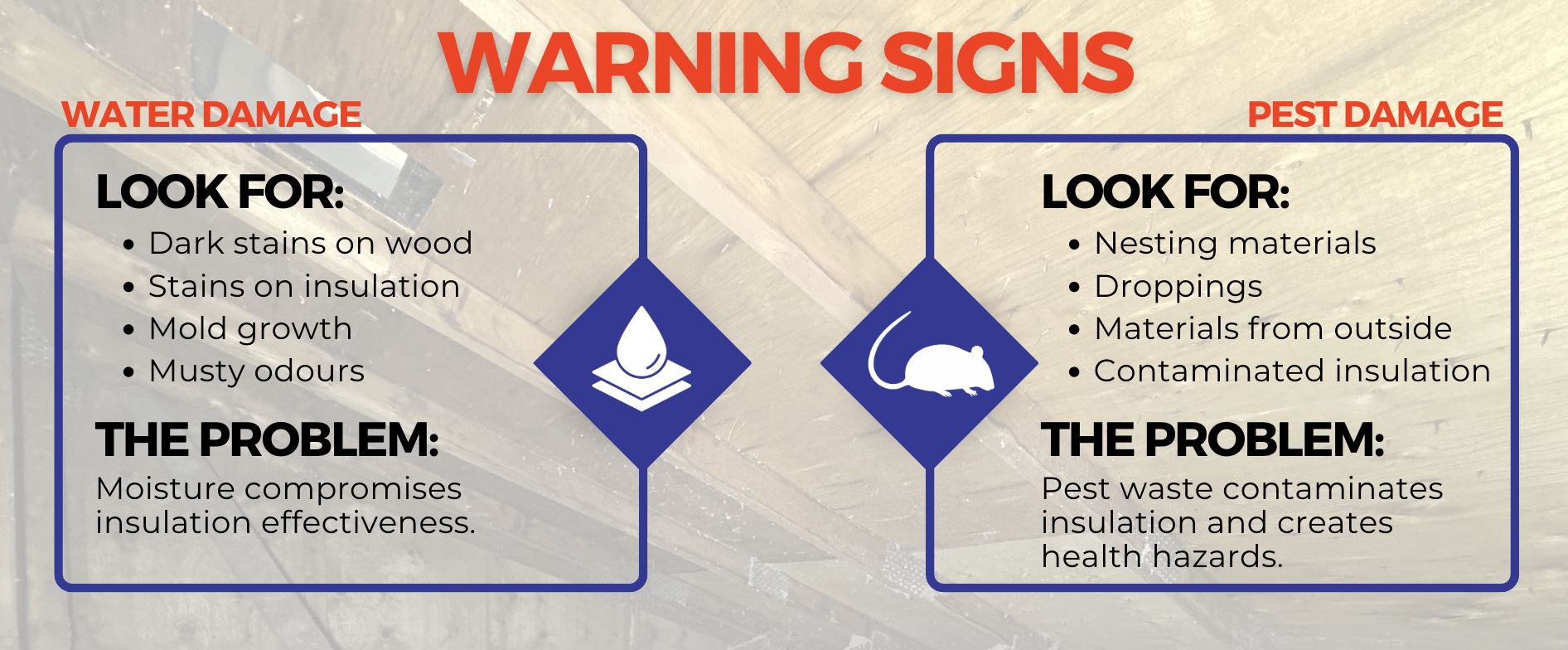
- Water Damage: Dark stains on wood or insulation, mold, or musty odors indicate moisture problems that can compromise insulation effectiveness.
- Pest Damage: Look for materials brought in from outside, nests, and especially droppings, which can contaminate insulation.
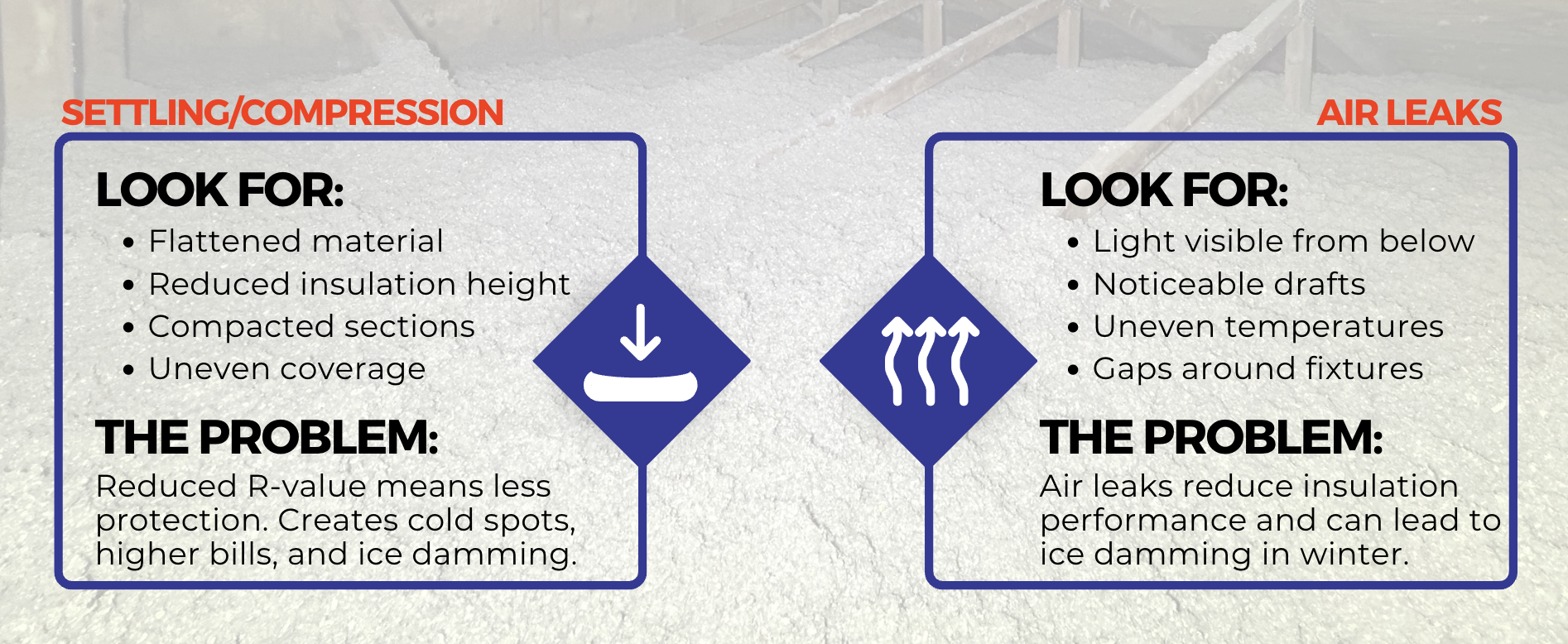
- Settling: Significant reduction in insulation height over time, or compacted, flattened material means reduced R-value.
- Air Leaks: Light visible from outside or lower floors, plus noticeable drafts, indicate air sealing issues that reduce insulation effectiveness.
What This Assessment Tells You
This basic inspection helps you understand whether you need:
- Additional insulation to meet current code requirements
- Complete insulation replacement due to damage or contamination
- Air sealing work to maximize insulation performance
- Professional removal of potentially hazardous materials
Getting Accurate Quotes
With this information from a self-assessment, you can provide contractors with specific details about your current insulation type, depth, and any visible issues. This leads to more accurate quotes and helps you avoid surprises during the work.
While this DIY insulation assessment gives you a helpful baseline, a professional evaluation can identify issues that aren’t visible from the hatch opening, including ventilation problems and hidden air leakage beneath existing insulation. Great Northern Insulation’s experienced consultants can provide an assessment of your attic insulation needs. Contact us for a free, no-obligation quote and let our 40+ years of Ontario insulation experience help guide your insulation upgrade decisions.